


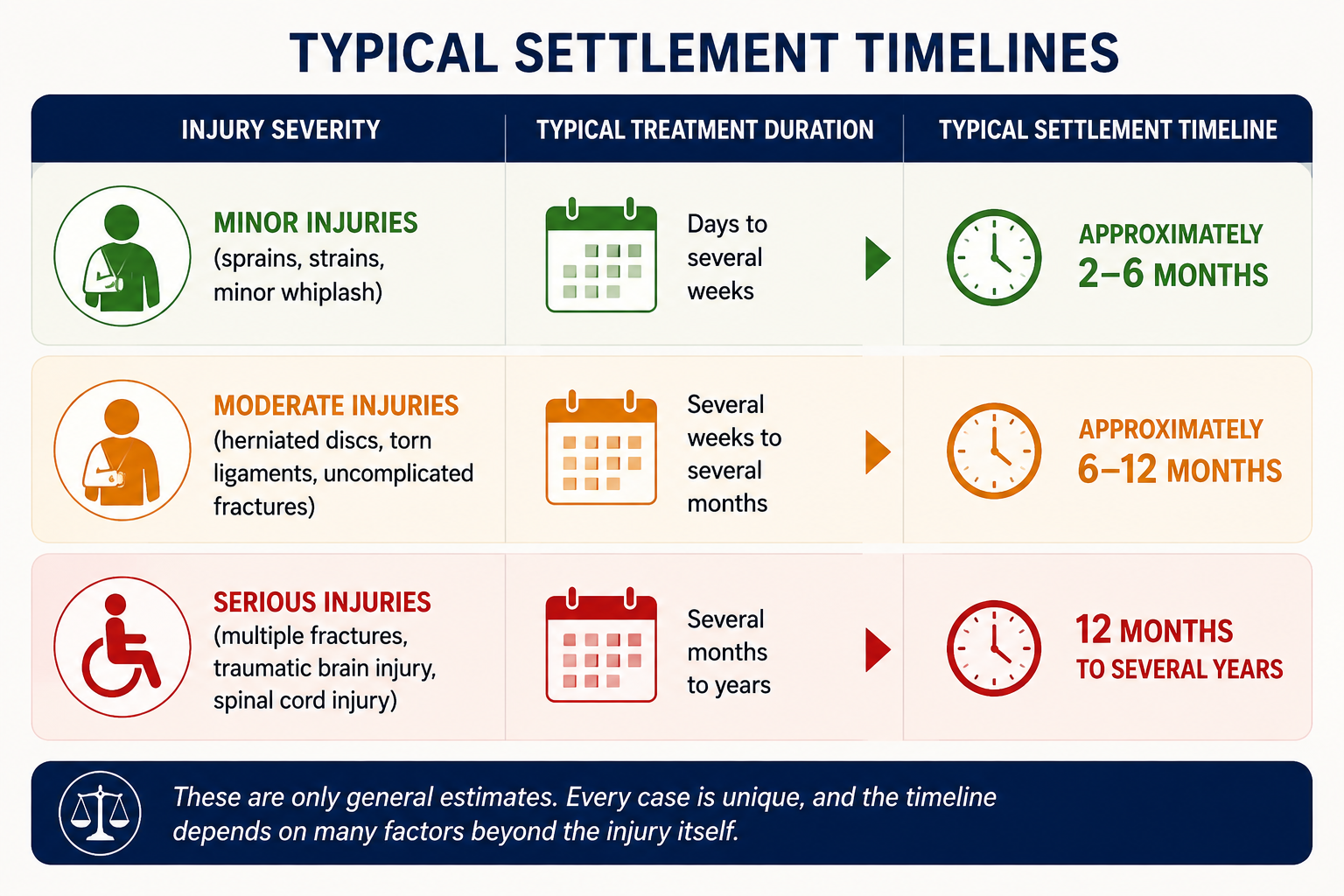
One of the biggest factors influencing how long a car accident settlement takes is the severity of your injuries.
A person who walks away with a minor soft tissue injury will likely have a much different timeline than someone recovering from multiple fractures, a traumatic brain injury, or spinal cord damage.
Generally speaking, more serious injuries require:
Insurance companies want to understand the full extent of your injuries before agreeing to a settlement. Unfortunately, that means claims involving serious injuries almost always take longer than claims involving relatively minor injuries.
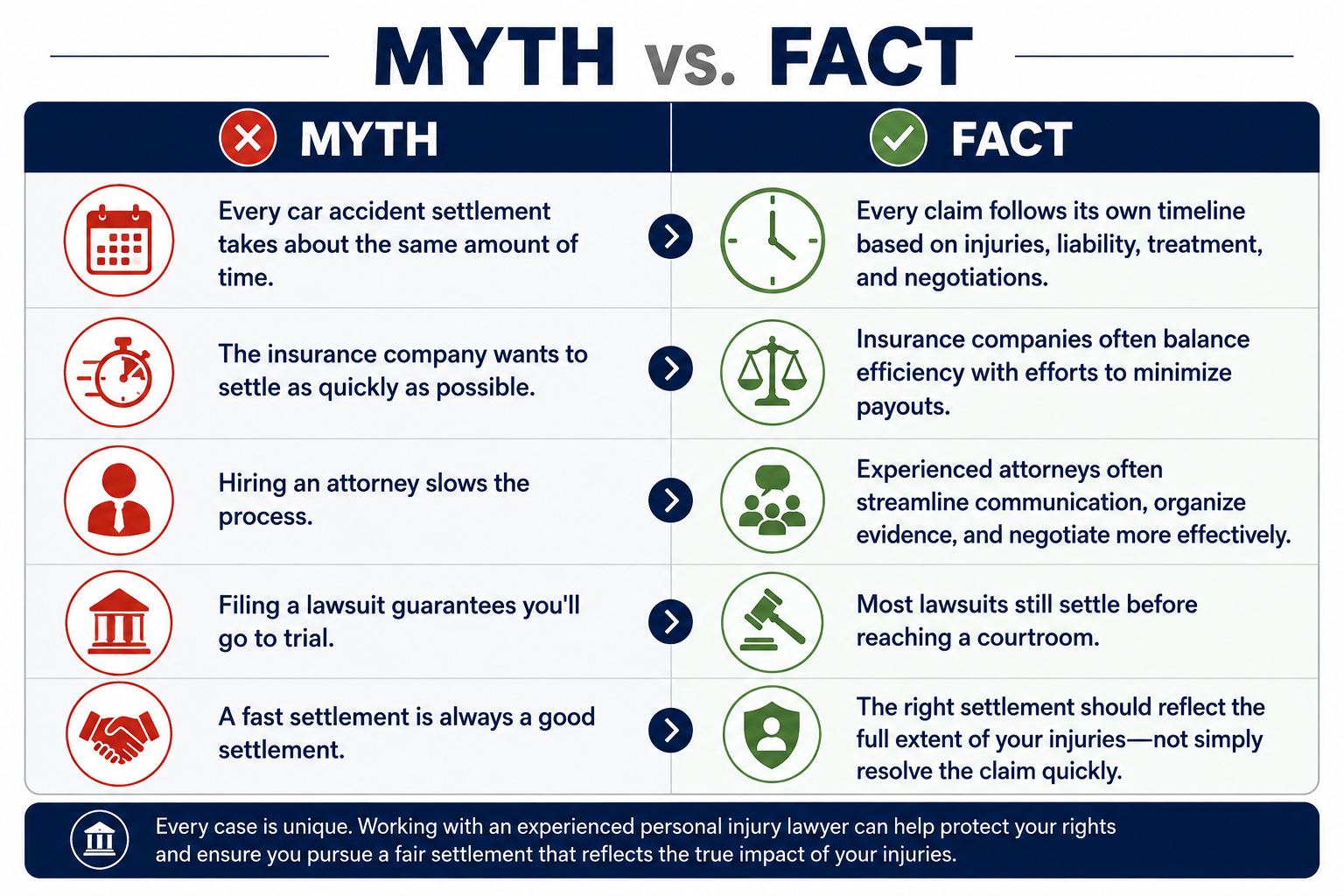
Many accident victims assume the insurance company is working toward a quick resolution.
While some insurers handle claims efficiently, others intentionally slow the process in hopes that financial pressure will encourage injured people to accept a lower settlement.
Some of the more common delay tactics include:
The adjuster may repeatedly ask for:
While some requests are legitimate, unnecessary or repetitive requests can delay negotiations.
Insurance companies sometimes argue that:
These disputes often require additional documentation from your medical providers.
Even when fault appears obvious, an insurance company may attempt to shift some responsibility to you.
For example, they may argue that you:
Because Colorado follows modified comparative negligence rules, assigning even partial fault can reduce the value of your settlement.
Many first settlement offers are intentionally conservative.
The insurance company may be evaluating whether you'll accept less than your claim is worth before negotiations fully develop.
A carefully prepared response supported by evidence often results in more productive settlement discussions.
Fortunately, most Colorado car accident claims settle without ever going to trial.
However, there are situations where filing a lawsuit becomes the most effective way to protect your rights.
Examples include:
Filing a lawsuit does not mean your case will automatically be decided by a jury.
In fact, many claims settle after litigation begins.
The discovery process often allows both sides to better evaluate the strengths and weaknesses of the case, leading to renewed negotiations.
"Preparing every case as though it may eventually go to trial often results in stronger settlements. Insurance companies recognize when a legal team is fully prepared, and that preparation frequently creates opportunities to resolve cases without ever stepping into a courtroom."
— Chris Parks, Attorney at Law
Even strong cases can lose momentum when avoidable mistakes occur.
Delaying treatment gives the insurance company an opportunity to argue that your injuries were not serious—or were caused by something other than the accident.
Consistent treatment demonstrates that you're actively working toward recovery.
Large gaps in treatment may weaken your claim and prolong negotiations.
Photos or comments taken out of context can become evidence used to challenge your injuries.
Until your case concludes, it's generally best to avoid discussing the accident or your recovery online.
Insurance adjusters are trained to gather information that helps evaluate claims.
Statements made early in the process may later be interpreted differently than intended.
Having an attorney communicate with the insurance company on your behalf can help protect your interests.
Quick settlements are appealing when medical bills are piling up.
However, accepting compensation before understanding your long-term prognosis may leave you responsible for future expenses that should have been included in the settlement.
Consider this example.
A Boulder resident is rear-ended while stopped at a traffic light.
Initially, he experiences neck stiffness and believes he'll recover within a few weeks.
Over the next several months, however, he continues experiencing pain and numbness in his arm.
An MRI reveals a herniated cervical disc.
He undergoes injections, extensive physical therapy, and eventually requires surgery.
What initially appeared to be a straightforward claim ultimately takes more than a year to resolve.
Had he accepted the insurance company's early offer shortly after the accident, his settlement likely would not have accounted for surgery, ongoing rehabilitation, or future medical expenses.
Although every case is different, situations like this illustrate why understanding the complete nature of an injury is often more important than resolving a claim quickly.
Not really. While some claims resolve within a few months, others involving serious injuries or disputed liability may take a year or longer.
You can't control every aspect of the process, but you can help your claim move efficiently by seeking prompt medical treatment, following your doctor's recommendations, preserving evidence, and responding quickly to requests from your attorney.
Your attorney wants to understand the full extent of your injuries before negotiating. Settling too early may prevent you from recovering compensation for future medical expenses or long-term impairments.
The insurance company reviews your demand package, evaluates the evidence, and usually begins settlement negotiations by making an offer, requesting additional information, or disputing portions of the claim.
Sometimes. However, this depends on whether your physicians can reasonably estimate your future medical needs and prognosis.
Not necessarily. Many claims settle after litigation begins, and filing suit can sometimes encourage more meaningful negotiations.
Every case is different, but first offers are often lower than the final settlement amount. Before accepting any offer, it's important to understand whether it fairly compensates you for both your current and future losses.
Colorado follows a modified comparative negligence system. You may still recover compensation if you are found to be less than 50% responsible, although your recovery may be reduced by your percentage of fault.
No. The vast majority of personal injury claims are resolved through negotiated settlements rather than jury trials.
Chris Parks Law handles personal injury cases on a contingency fee basis. You pay no attorney's fees unless compensation is recovered for you.
Continue learning about the Colorado personal injury claims process:
You may also find these practice area pages helpful:
Waiting for a car accident settlement can be frustrating, especially when you're trying to recover physically while managing medical bills, lost income, and uncertainty about the future. Although every claim follows a different timeline, understanding the process can help you make informed decisions and avoid costly mistakes.
At Chris Parks Law, we believe that every client deserves more than a quick settlement—they deserve a fair settlement that reflects the true impact of the accident on their life. From investigating the crash and documenting your injuries to negotiating with insurance companies and preparing for trial when necessary, we're committed to protecting your interests every step of the way.
If you've been injured in a car accident in Boulder or anywhere in Colorado, we're here to help you understand your options and pursue the compensation you deserve.
Contact Chris Parks Law today for a free consultation and let us help you move forward with confidence.


